Ditapis dengan

Spectrometric Identification of Organic Compounds
Spectrometric Identification of Organic Compounds by R. M. Silverstein, F. X. Webster, and D. J. Kiemle is a comprehensive guide to the identification of organic compounds using various spectrometric techniques. The book focuses on three primary methods: Mass Spectrometry (MS), Infrared Spectroscopy (IR), and Nuclear Magnetic Resonance (NMR) spectroscopy, providing detailed explanations on how …
- Edisi
- -
- ISBN/ISSN
- -
- Deskripsi Fisik
- -
- Judul Seri
- -
- No. Panggil
- 547.346 SIL s
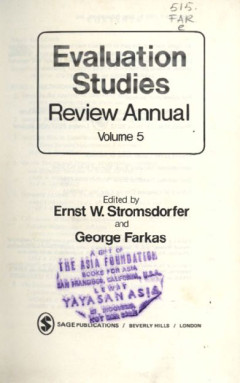
Evaluation Studies Review Annual; Volume 5
In "Evaluation Studies Review Annual; Volume 5", Ernst W. Stromsdorfe provides an extensive review of current advancements in evaluation research across multiple disciplines. This volume brings together a collection of critical evaluations, methodologies, and case examples, offering key insights into the changing nature of evaluation practices. Topics explored include program assessment, policy…
- Edisi
- -
- ISBN/ISSN
- -
- Deskripsi Fisik
- -
- Judul Seri
- -
- No. Panggil
- 001.42 STR e

Modern Mathematics an Elementary Approach
Modern Mathematics: An Elementary Approach by Ruric E. Wheeler offers an accessible introduction to the key concepts and principles of modern mathematics. The book is structured to present complex mathematical ideas in a way that is easy for beginners to grasp, with a focus on clarity and simplicity. It covers a broad spectrum of topics, starting from basic arithmetic to more advanced concepts,…
- Edisi
- -
- ISBN/ISSN
- -
- Deskripsi Fisik
- -
- Judul Seri
- -
- No. Panggil
- 510.76 WHE m
PENGEMBANGAN ALAT UKUR SUHU DAN KELEMBABAN DIGITAL MENGGUNAKAN TRIPLE MODULAR…
- Edisi
- -
- ISBN/ISSN
- -
- Deskripsi Fisik
- 116hal; ilus; 30cm
- Judul Seri
- -
- No. Panggil
- I 18 019 AND p
- Edisi
- -
- ISBN/ISSN
- -
- Deskripsi Fisik
- 116hal; ilus; 30cm
- Judul Seri
- -
- No. Panggil
- I 18 019 AND p
RANCANG BANGUN CHAMBER TERMOMETER TANAH PORTABLE
- Edisi
- -
- ISBN/ISSN
- -
- Deskripsi Fisik
- 132hal; ilus; 30cm
- Judul Seri
- -
- No. Panggil
- I 18 028 WIN r
- Edisi
- -
- ISBN/ISSN
- -
- Deskripsi Fisik
- 132hal; ilus; 30cm
- Judul Seri
- -
- No. Panggil
- I 18 028 WIN r
RANCANG BANGUN PENGUKUR INHOMOGENITAS OTOMATIS CHAMBER KELEMBAPAN UDARA
- Edisi
- -
- ISBN/ISSN
- -
- Deskripsi Fisik
- 91hal; ilus; 30cm
- Judul Seri
- -
- No. Panggil
- I 18 005 SAR r
- Edisi
- -
- ISBN/ISSN
- -
- Deskripsi Fisik
- 91hal; ilus; 30cm
- Judul Seri
- -
- No. Panggil
- I 18 005 SAR r

The rise and fall of the carbon dioxide theory of climate change
The Rise and Fall of the Carbon Dioxide Theory of Climate Change by Rex J. Fleming challenges the widely accepted notion that carbon dioxide (CO₂) is a primary driver of global warming. The book examines historical climate patterns, including ice ages and interglacial periods, to evaluate the impact of CO₂ on temperature fluctuations. Through an in-depth analysis of 20th-century climate dat…
- Edisi
- edisi pertama
- ISBN/ISSN
- 978-3-030-16879-7
- Deskripsi Fisik
- xiv, 176 hal; Illus;
- Judul Seri
- -
- No. Panggil
- 363.73874 FLE t
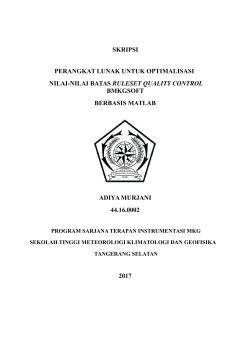
PERANGKAT LUNAK UNTUK OPTIMALISASI NILAI-NILAI BATAS RULESET QUALITY CONTROL …
- Edisi
- -
- ISBN/ISSN
- -
- Deskripsi Fisik
- hal79;ilus;30cm
- Judul Seri
- -
- No. Panggil
- I 17 003 MUR p
- Edisi
- -
- ISBN/ISSN
- -
- Deskripsi Fisik
- hal79;ilus;30cm
- Judul Seri
- -
- No. Panggil
- I 17 003 MUR p
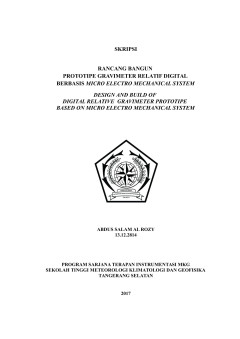
RANCANG BANGUN PROTOTIPE GRAVIMETER RELATIF DIGITAL BERBASIS MICRO ELECTRO ME…
- Edisi
- -
- ISBN/ISSN
- -
- Deskripsi Fisik
- 101hal;ilus;30cm
- Judul Seri
- -
- No. Panggil
- I 17 029 ROZ r
- Edisi
- -
- ISBN/ISSN
- -
- Deskripsi Fisik
- 101hal;ilus;30cm
- Judul Seri
- -
- No. Panggil
- I 17 029 ROZ r
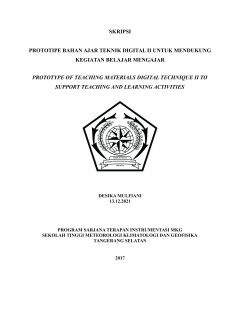
PROTOTIPE BAHAN AJAR TEKNIK DIGITAL II UNTUK MENDUKUNG KEGIATAN BELAJAR MENGAJAR
- Edisi
- -
- ISBN/ISSN
- -
- Deskripsi Fisik
- 74ha;ilus;30cm
- Judul Seri
- -
- No. Panggil
- I 17 038 MUL p
- Edisi
- -
- ISBN/ISSN
- -
- Deskripsi Fisik
- 74ha;ilus;30cm
- Judul Seri
- -
- No. Panggil
- I 17 038 MUL p
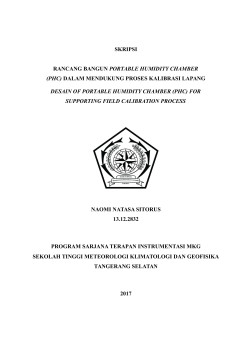
Rancang Bangun Portable Humidity Chamber (PHC) Dalam Mendukung Proses Kalibra…
- Edisi
- -
- ISBN/ISSN
- -
- Deskripsi Fisik
- 116hal;ilus;30cm
- Judul Seri
- -
- No. Panggil
- I 17 021 SIT r
- Edisi
- -
- ISBN/ISSN
- -
- Deskripsi Fisik
- 116hal;ilus;30cm
- Judul Seri
- -
- No. Panggil
- I 17 021 SIT r

Managing the Risks of Extreme Events and Disasters to Advance Climate Change …
Managing the Risks of Extreme Events and Disasters to Advance Climate Change Adaptation, a Special Report by the Intergovernmental Panel on Climate Change (IPCC), led by Christopher B. Field and collaborators, examines the connections between extreme weather events, natural disasters, and strategies for climate change adaptation. This extensive report delves into how climate change is intensify…
- Edisi
- First Edition
- ISBN/ISSN
- 978-1-107-60780-4
- Deskripsi Fisik
- 582 hal; illus; 28 cm
- Judul Seri
- -
- No. Panggil
- 363.73874 FIE
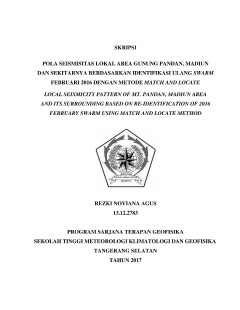
POLA SEISMISITAS LOKAL AREA GUNUNG PANDAN, MADIUN DAN SEKITARNYA BERDASARKAN …
- Edisi
- -
- ISBN/ISSN
- -
- Deskripsi Fisik
- 126 hal;illus;30 cm
- Judul Seri
- -
- No. Panggil
- G 17 028 AGU p
- Edisi
- -
- ISBN/ISSN
- -
- Deskripsi Fisik
- 126 hal;illus;30 cm
- Judul Seri
- -
- No. Panggil
- G 17 028 AGU p
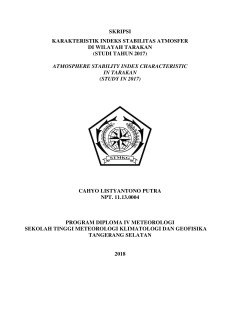
KARAKTERISTIK INDEKS STABILITAS ATMOSFER DI WILAYAH TARAKAN(STUDI TAHUN 2017)
- Edisi
- -
- ISBN/ISSN
- -
- Deskripsi Fisik
- 97hal; ilus; 30cm
- Judul Seri
- -
- No. Panggil
- M 18 010 PUT k
- Edisi
- -
- ISBN/ISSN
- -
- Deskripsi Fisik
- 97hal; ilus; 30cm
- Judul Seri
- -
- No. Panggil
- M 18 010 PUT k
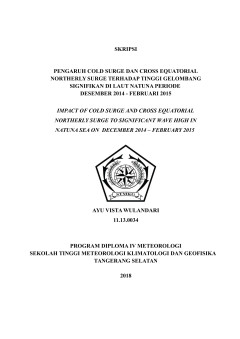
PENGARUH COLD SURGE DAN CROSS EQUATORIAL NORTHERLY SURGE TERHADAP TINGGI GELO…
- Edisi
- -
- ISBN/ISSN
- -
- Deskripsi Fisik
- 70hal;ilus;30cm
- Judul Seri
- -
- No. Panggil
- M 18 009 WUL p
- Edisi
- -
- ISBN/ISSN
- -
- Deskripsi Fisik
- 70hal;ilus;30cm
- Judul Seri
- -
- No. Panggil
- M 18 009 WUL p

Climate Change 2001: Mitigation Contribution of Working Group III to the Thir…
Climate Change 2001: Mitigation Contribution of Working Group III to the Third Assessment Report of the Intergovernmental Panel on Climate Change offers a comprehensive evaluation of mitigation strategies aimed at addressing climate change, as outlined by Working Group III of the IPCC. The book explores scientific findings, technological innovations, and policy approaches required to curb green…
- Edisi
- August 2001
- ISBN/ISSN
- 9780521807692
- Deskripsi Fisik
- 82 hal; illus; 30 cm
- Judul Seri
- -
- No. Panggil
- 363.738 CHA c
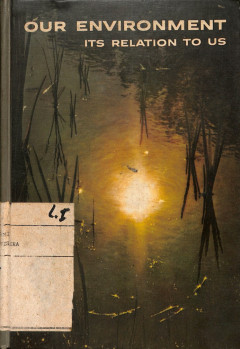
Our Environment Its Relation To Us
Our Environment: Its Relation to Us by Harry A. Carpenter examines the complex connection between humans and the environment. The book explores how human actions affect ecosystems and the natural world, highlighting the interdependence between living organisms and their surroundings. It discusses a variety of environmental issues such as pollution, resource depletion, and the consequences of in…
- Edisi
- -
- ISBN/ISSN
- -
- Deskripsi Fisik
- 466 hal; illus; 24 cm
- Judul Seri
- -
- No. Panggil
- 577.2 CAR o

Geodynamics Applications of Continuum Physics to Geological Problems
Geodynamics: Applications of Continuum Physics to Geological Problems by Donald L. Turcotte offers an in-depth exploration of how principles of continuum physics are applied to solve geological problems, particularly those related to Earth's dynamics. Turcotte investigates various geophysical processes that influence the structure and movement of Earth's crust, focusing on phenomena like plate …
- Edisi
- -
- ISBN/ISSN
- -
- Deskripsi Fisik
- 350 hal; illus; 25 cm
- Judul Seri
- -
- No. Panggil
- 551.70 TUR g
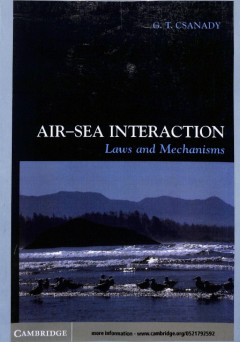
Air-Sea Interaction Laws and Mechanisms
Air-Sea Interaction: Laws and Mechanisms, first published in 2001, provides a comprehensive account of how the atmosphere and the ocean interact to control the global climate, what physical laws govern this interaction, and its prominent mechanisms. In the early twenty-first century air-sea interaction emerged as a subject in its own right, encompassing small-scale and large-scale processes in …
- Edisi
- 2004
- ISBN/ISSN
- 0-521-79680-6
- Deskripsi Fisik
- 239 hal; illus; 30 cm
- Judul Seri
- -
- No. Panggil
- 551.46 CSA a
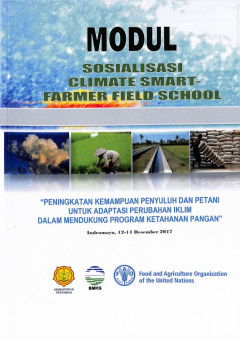
Modul Sosialisasi Climate Smart-Farmer Field School
Buku Modul Sosialisasi Climate Smart-Farmer Field School yang diterbitkan oleh BMKG merupakan panduan praktis untuk membantu petani meningkatkan kemampuan mereka dalam menghadapi dampak perubahan iklim. Modul ini menggabungkan ilmu tentang iklim dengan praktik pertanian adaptif untuk mendukung pengelolaan risiko cuaca ekstrem dan optimalisasi penggunaan informasi iklim guna meningkatkan keberla…
- Edisi
- Desember 2017
- ISBN/ISSN
- -
- Deskripsi Fisik
- 144 hal; illus; 30 cm
- Judul Seri
- -
- No. Panggil
- 551.6 BMK m
 Karya Umum
 Filsafat
 Agama
 Ilmu-ilmu Sosial
 Bahasa
 Ilmu-ilmu Murni
 Ilmu-ilmu Terapan
 Kesenian, Hiburan, dan Olahraga
 Kesusastraan
 Geografi dan Sejarah